
The Best Exterior Colour Combinations for London Homes: A Decorator’s Guide
Introduction
Picking the right exterior colour combinations for London homes is one of those decisions that looks easy on Pinterest and turns into a headache the moment you stand on the pavement holding a paint card against your own front wall. I've been on enough London streets, in enough weather, looking at enough doors and stucco and brick combinations to tell you this: most exterior schemes go wrong not because the colours are bad, but because the pairings are wrong for the property and its setting.
This guide walks you through the combinations that actually work on London houses, why they work, the rules around conservation areas you need to know about, and the practical mistakes that ruin schemes before the paint's even dry. Whether you're sat in a Victorian terrace in Hackney, a stuccoed Georgian in Islington, or a 1930s semi in Ealing, the principles below will save you from a colour scheme you'll regret in six months.
Why London Houses Need a Different Approach to Exterior Colour
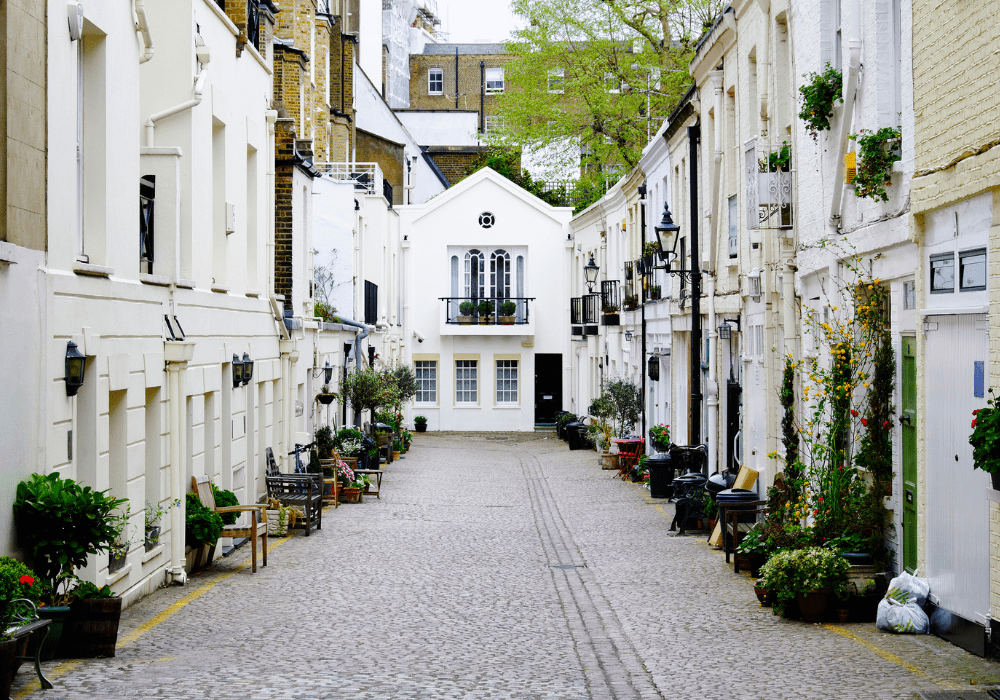
Here's the thing about London. Our houses sit shoulder to shoulder. What looks great in isolation can clash horribly when you step back and see it next to the four properties either side. The whole terrace tells a story. Painting yours in a way that ignores that story is the fastest way to make the house look out of place.
There's also the brick to think about. London stock brick (that warm, slightly yellowy buff colour you see across most of the inner boroughs) has very specific undertones. Paint a cool, blueish white next to it and the brick suddenly looks dirty. Pair the same brick with a warm off-white and it reads as honey-toned and inviting. The brick hasn't changed. The pairing has.
Conservation Areas and Planning Rules
Before we get into colours, a quick warning. Large parts of London (Camden, Kensington and Chelsea, Westminster, parts of Hackney, Hammersmith, Lambeth, the list goes on) sit inside conservation areas. In some of these, you need planning permission before changing the colour of your exterior. The penalties for ignoring this are real.
Check your address on your local council's planning portal before you commit. Listed buildings are stricter still. For period properties, Historic England's guidance on painting and decorating older buildings is the place to start. It covers permissions, materials and breathability, and it'll save you from expensive mistakes.


What's the most popular exterior paint colour for London houses?
Warm off-whites and soft stone tones dominate London exteriors, particularly Farrow and Ball Wimborne White, Pointing, and Little Greene Slaked Lime. These shades complement London stock brick without competing with it and provide a calm canvas for a more characterful front door colour.
Do I need planning permission to repaint the outside of my London house?
It depends on the location. Most London properties don't require permission for repainting in the same colour scheme, but if you're inside a conservation area or own a listed building, you may need approval before changing colours. Always check with your local council planning portal first. Penalties for unauthorised changes can include being required to repaint at your own cost.
What colour front door is best for a Victorian terrace?
Saturated, deep colours work best. Black, deep navy (like Hague Blue), forest green (Brunswick or Studio Green), oxblood red, and mustard yellow are the most successful traditional choices. Pastel doors generally look weak against London stock brick. Pair the door colour with brass or oil-rubbed bronze hardware on Victorian properties, never chrome.
Should my exterior paint match the neighbours?
Match isn't quite the right word, but harmonise yes. London terraces work as a unified architectural row, so your colour should sit comfortably alongside the neighbouring properties. Clashing colours make the whole terrace look chaotic and can actually lower the perceived value of the run. In conservation areas, neighbour coordination may even be required.
How often should I repaint the exterior of my London home?
A properly prepped and painted exterior should last between 7 and 10 years on masonry, and 5 to 7 years on woodwork. South-facing and west-facing elevations weather faster due to sun exposure. Annual maintenance checks of the woodwork (particularly windowsills and door frames) will catch problems early and extend the time between full repaints.


The Best Exterior Colour Combinations for London Homes by Property Type
Every era of London housing has its own personality. The exterior scheme that flatters a Victorian terrace will look wrong on a Georgian villa, and a 1930s semi needs something different again. Here's what consistently works.
Victorian Terraces: Warm Off-Whites With a Saturated Door
This is the most common London property type and arguably the most rewarding to paint. Victorian terraces respond beautifully to a soft, warm off-white on the stucco or masonry, paired with a single confident door colour.
The combinations I see working again and again on London streets:
- Farrow and Ball Wimborne White masonry, Railings front door, black ironwork
- Little Greene Slaked Lime masonry, Deep Brunswick Green door, brass furniture
- Mylands Marble Arch masonry, Bond Street Blue door, polished chrome fittings
- Farrow and Ball Pointing masonry, Eating Room Red door, black railings
The trick is to keep the masonry calm and let the door carry the personality. Saturated, deep colours work best on Victorian doors. Pastels almost always look weak against London stock brick.
Georgian and Stuccoed Properties: Stone Tones and Soft Neutrals
Georgian London properties, particularly in areas like Islington, Bloomsbury and parts of Chelsea, were built with stucco façades designed to mimic stone. Your scheme should honour that intention.
Strong combinations:
- Farrow and Ball Stone White with Studio Green woodwork
- Little Greene Portland Stone with Basalt sash windows
- A pale buff masonry with Off-Black for railings and front door
Avoid bright whites here. They make Georgian properties look chalky and modern in a way that fights the architecture.
Edwardian Semis and 1930s Houses: Bolder Pairings That Modernise
Edwardian and 1930s homes have a bit more flexibility. They sit between the heritage feel of Victorian and the cleaner lines of modern housing, so they can take slightly bolder combinations.
Schemes worth considering:
- Warm grey masonry (think Dulux Goose Down or F&B Cornforth White) with a deep navy or charcoal door
- Cream render with sage green woodwork and a warm terracotta door
- Pale taupe masonry with inky blue-black door and chrome fittings
These properties often have pebbledash or rendered sections that take masonry paint particularly well, giving you more surface area to play with.
Modern London Homes and Conversions
For newer London properties or modern flat conversions, the rulebook loosens. The biggest mistake here is going too safe with brilliant white everything. A warm off-white with a deeply pigmented door (think charcoal, deep green, or oxblood) almost always looks more considered than crisp white with a coloured door.
Front Door Colour Ideas London Homeowners Should Consider
The front door is where personality lives. A few specific colours have earned their reputation on London streets, and for good reason.
- Deep navy (F&B Hague Blue, Little Greene Hicks' Blue) reads sophisticated, works with almost any brick
- Forest green (F&B Studio Green, Brunswick Green) is properly traditional and ages well
- Black (F&B Off-Black, never a brilliant black) is timeless and pairs with brass beautifully
- Oxblood red (F&B Eating Room Red, Little Greene Tuscan Red) brings warmth without shouting
- Mustard yellow (Mylands Haymarket) is a confident contemporary choice for paler façades
Whatever you pick, paint the door frame in the same colour as the door itself. Mismatching the two is one of those small mistakes that cheapens the whole entrance.
The Practical Side: Masonry Paint, Finishes and Prep
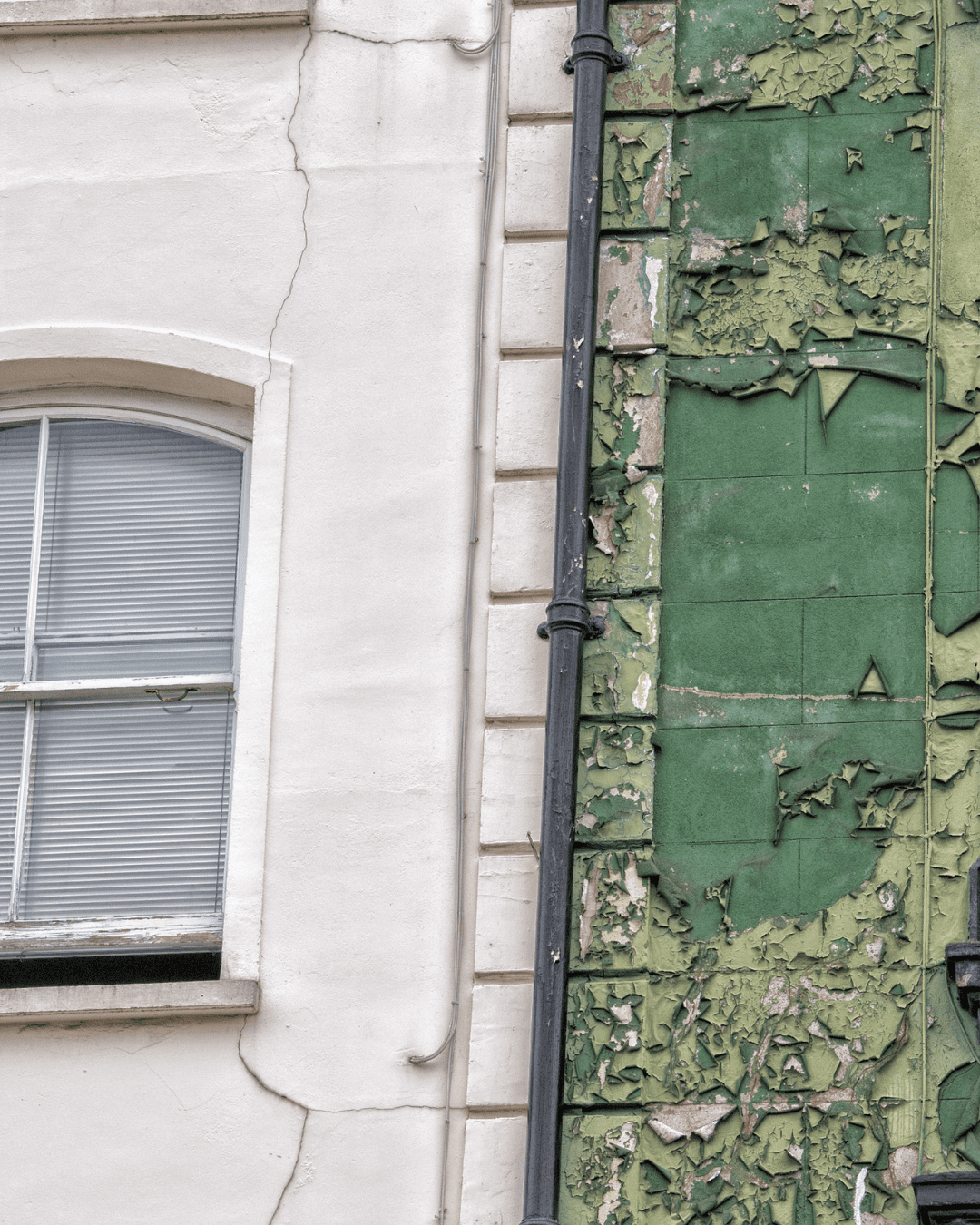
The best colour combination in the world will fail if the paint isn't right for the surface. London weather is brutal on exteriors. Driving rain, pollution, freeze-thaw cycles, the works. Your paint has to handle it.
For masonry, look at proper breathable products like Earthborn Silicate or Beeck Mineral Paints on older properties, or high-quality acrylic masonry paints like Sandtex Ultra Smooth or Dulux Weathershield on newer surfaces. The cheap stuff peels within two winters.
For woodwork (doors, sash windows, fascias), use proper exterior eggshell or gloss. Two coats minimum, three for darker colours. And for any timber that's been there a while, prep matters more than the paint itself. The Painting and Decorating Association has useful resources on professional standards and prep work if you want to know what a quality job actually involves.
A Word on Sampling
Always, always sample your exterior colours on the actual building before committing. Paint A3 lining paper, attach it to the wall, look at it in morning light, midday light, and dusk. South-facing façades take colour very differently to north-facing ones. A combination that looks beautiful on a sunny afternoon can fall flat under flat winter light.
A Final Word
The best exterior colour combinations for London homes aren't about following trends. They're about reading the building, respecting the street it sits on, and picking pairings that flatter both. Get those three things right and you've got a scheme that'll still look good in fifteen years. Get them wrong and you'll be holding paint cards up to your wall again before the next election.
If you're weighing up a new exterior scheme and want a professional opinion on what'll work for your specific property, that's exactly the sort of walk-and-talk visit we're happy to do across London. A proper look at the brick, the aspect, the surrounding terrace, and a chat about what you actually want from the finish, costs nothing and usually saves a lot of repainting.
Get in touch with Marsh and Hall today
Whether you're planning a full renovation or simply looking to refresh a room within your home, Marsh & Hall offer expert craftsmanship and a reliable, professional service from start to finish. Don’t hesitate to get in touch—we’ll be delighted to help bring your vision to life.
Contact Us
To enquire about any of our services, please call us on 07801 525121 or complete this form below and we will get back to you.